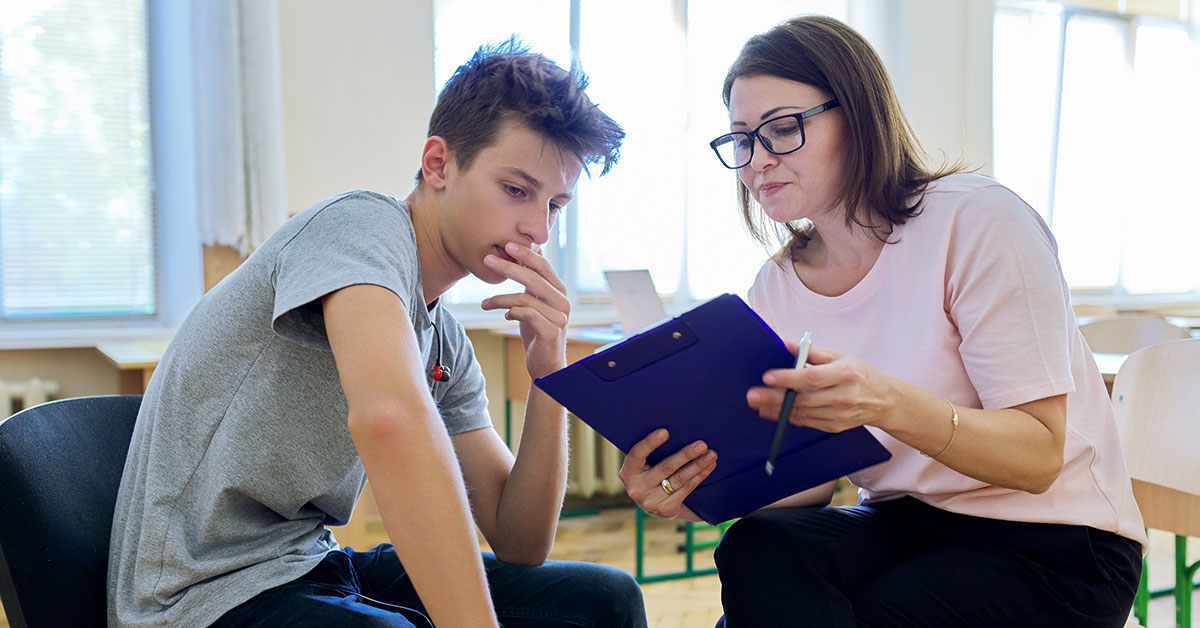
“Small wins matter.” That’s the big take-home message from nurse Alison Duffin, who delivers care at three high schools through the Doctors in Secondary Schools (DiSS) program.
“It’s not always about fixing everything, but about making sure a young person feels seen, heard, and supported,” she says.

Alison provides care at Hume Central, Braybrook and Lalor North secondary colleges. She started in February 2023.
“Initially I was at just one clinic,” she recalls. “Meeting students where they are really resonated with me.
“I loved the one-to-one contact with young people and could immediately see the benefits of this approach, especially given my background in working with young people in outreach settings.
“It felt like a natural progression to expand my role across more campuses.”
With each new school, she says, the first order of business is to find connections with staff and students.
“Early on, a key challenge was building collaboration across schools with different systems and expectations,” she explains.
“By being visible, approachable, and consistent, I developed trust and strong partnerships. It’s now incredibly rewarding to see well-being teams and staff actively referring students and recognising the value of a holistic model of care.”
As well as providing onsite medical care and advice, DiSS teams often hear from students about physical or mental health concerns they feel uncomfortable raising with family or their regular GP.
However, this is not an automatic process. Trust is something that has to be earned, slowly, gently, and authentically.
“I will try everything to gently break down the barriers or shields they carry, often because of past trauma,” Alison says.
“Whatever their story or journey has been, they’ve survived and continued — and that should never be underestimated.
“I love those moments when a client feels safe enough to disclose something important or leaves a consultation feeling more confident and hopeful. It’s a privilege to walk alongside them, helping them make sense of their health, themselves, and their choices in a way that empowers them.”
Key to this, she says, is to make sure that she works from a ‘trauma-informed’ perspective. She is happy to explain what the term means.
“For me, trauma-informed practice is all about understanding the young person in front of you and responding in a way that feels safe, respectful, and empowering,” she says.
“It’s a strengths-based framework, with a strong commitment to respecting diversity built on five core principles of safety, trustworthiness, choice, collaboration, and empowerment.
“At the core is safety. If a young person doesn’t feel physically and emotionally safe, nothing else happens. They won’t talk, they won’t explore what’s going on for them, and they definitely won’t revisit anything painful. Our job is to create an environment where they feel they can take a breath and let their guard down, even just a little.”
For Alison, the most important safeguard for maintaining mental and physical health during the challenging years of high school is sleep hygiene.
“During adolescence, the brain is doing huge amounts of work — pruning and strengthening neural pathways. Sleep is absolutely vital for this process,” she says.
“It helps consolidate memories, process information, and support learning.
When young people are sleep-deprived, we see problems with concentration, decision-making, emotional regulation, and academic performance.”
Although she feels the experience of delivering DiSS services is empowering, personally and professionally, she acknowledges that it can be challenging at first. She is happy to provide advice for nurses of GPs just starting in the field.
“Take the time to really understand each school’s culture — no two are the same,” she says.
“Be patient, flexible, and authentic. Relationships are everything: with the students in the hallway, the clients, the well-being team, the other staff, and of course, the external services.”
If you have any questions for Alison, she invites communication via alison.duffin@orygen.org.au
To find out more about the Doctors in Secondary Schools program, see this NWMPHN webpage.
If you would like to add your reflections or tips to share in our next newsletter, please email diss@nwmphn.org.au
Alison’s top tips
|
Alison’s top sleep hygiene tips
|