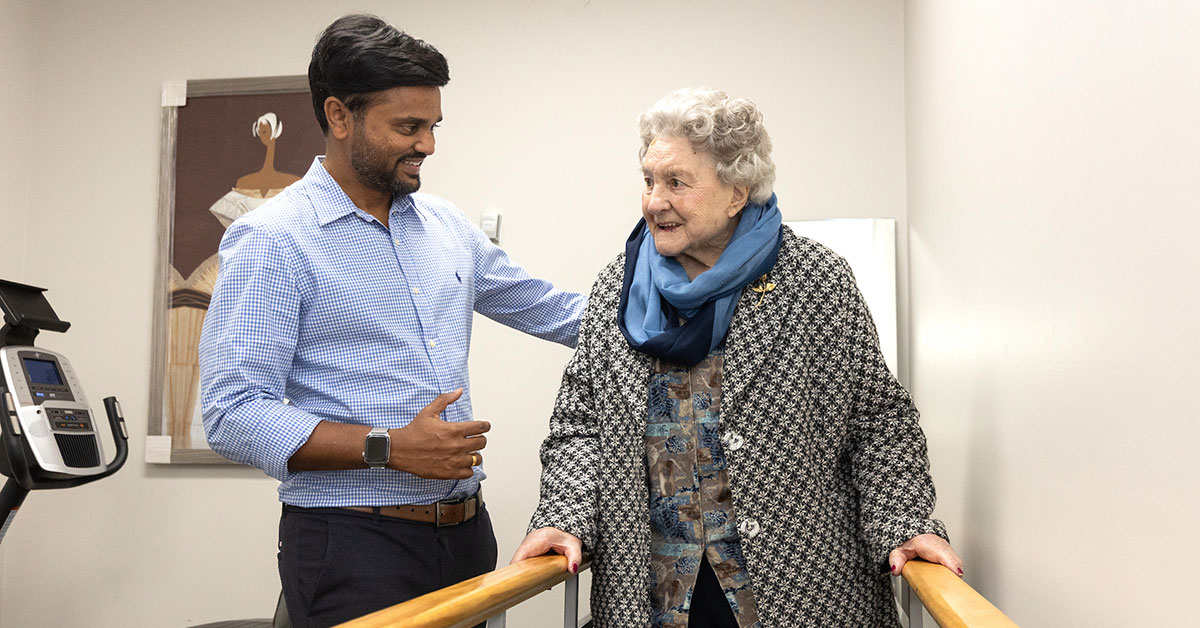
Becky Candotti, a registered nurse, knew from professional experience how difficult it would be for her elderly mother to recover mobility after breaking a hip in February 2025.
“Knowing what I know I thought it might be a bit beyond us,” Becky said.
Her mother, Anne, 87, already had health issues that were likely to impede recovery, so when her nursing home, CraigCare in Moonee Ponds, offered a physiotherapy program Becky didn’t have high expectations.
Anne was also doubtful, but barely three months later she could walk around her room and travel short distances using a walking frame. She no longer needed a sit-to-stand hoist to go to the bathroom – about which she was particularly pleased.
Her next goal is to be able to get in and out of Becky’s car so she can visit her daughter’s home without needing a wheelchair.
Becky credited the enthusiasm and expertise of physiotherapist Ash Bhoina, from local business Physio Care and Rehab Services, for getting her mum back on her feet.
“Ash’s passion for keeping elderly people mobile shone through from the beginning,” she said. “I wasn’t expecting to see that in a young male physio.
“The other day I said to him ‘Ash, I’m so sorry I was Debbie Downer, originally – thank you, thank you for never giving up’.”
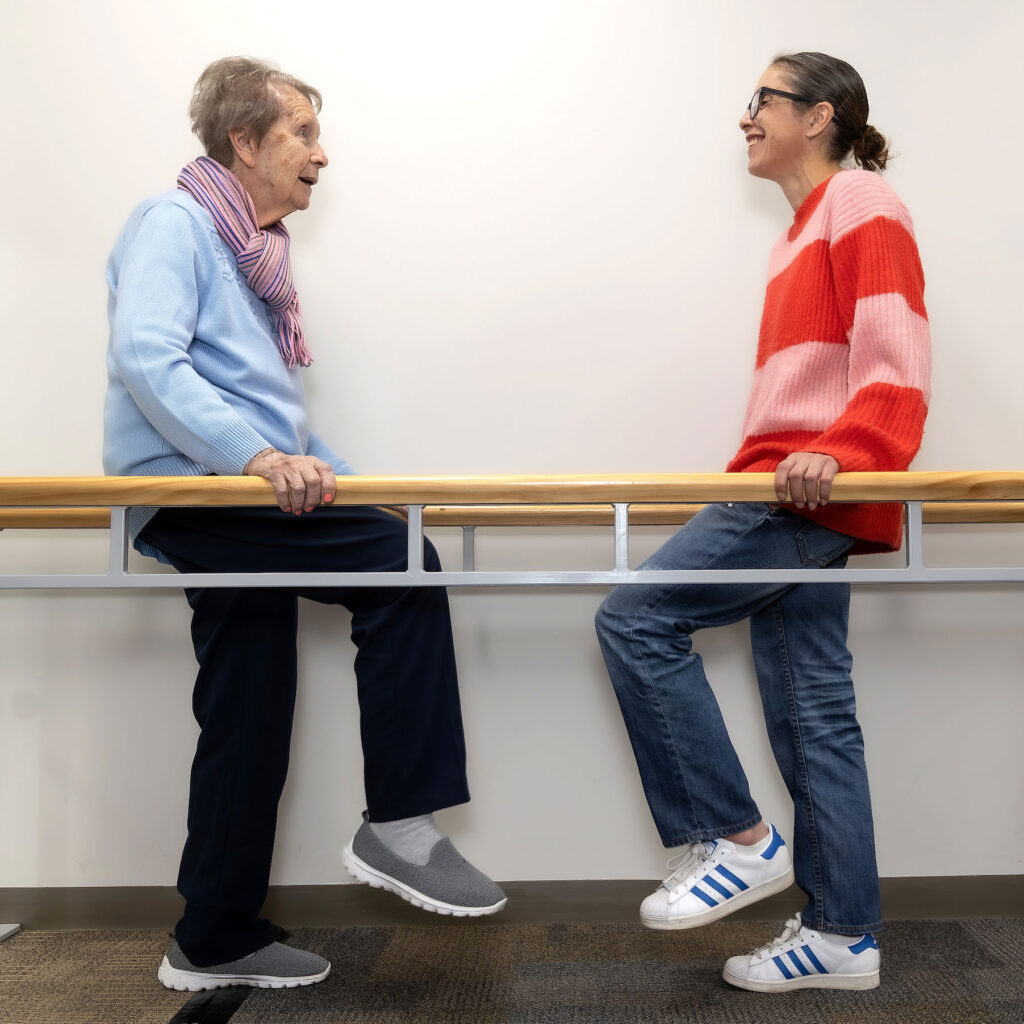
Ash and other physiotherapists were funded through North Western Melbourne Primary Health Network’s Allied Health in Residential Aged Care program. It was conceived during the COVID-19 pandemic to counter the decline in mobility that restrictions were creating within residential aged care homes.
Based on an earlier approach called the Sunbeam program, it funded allied health providers to reduce falls among residents. The program involved 123 of the 128 aged care homes in the NWMPHN catchment. More than 5000 residents participated.
Funding was in place from 1 July 2021 to 1 July 2025 – but in many aged care facilities, activities based on this program continue.
For Ash, NWMPHN funding enabled him to demonstrate that working with allied health could improve residents’ lives and the aged care home’s business model.
“Even though the funding has now ended … it allowed us to show management that allied health isn’t just here to do reviews, care plans, post hospital admissions but here to work with residents to improve quality of life and by reducing falls,” he explained.
“They’re able to move better, the outcomes they’ve achieved are amazing.
“I had a resident who said ‘Ash, I could go to Puckle Street [in Moonee Ponds] before COVID, but I’m not able to go there for a coffee now’. But after four months of this program he was able to do that again. So, all these things have only been able to be achieved with the PHN program.
“The collaboration and trust between management and allied health has grown significantly. Once the PHN funding had finished we were able to go to management with the numbers and show them what we had achieved.”
The results included reducing the average number of falls among the 100-plus residents. There was even a record 16 days without a single fall.
CraigCare has now increased the number of hours they fund Physio Care and Rehab Services to deliver care to residents, and provided Ash with an area to turn into a permanent ‘wellness centre’.
The company has also expanded the program to its homes in Glenroy and Pascoe Vale.
Beyond happier residents and family, watching Ash and his team in action has changed how the aged care home’s staff work.
For example, if a resident is having trouble moving, a staff member might suggest a round of sit-to-stand exercises instead of immediately reaching for a hoist or wheelchair.
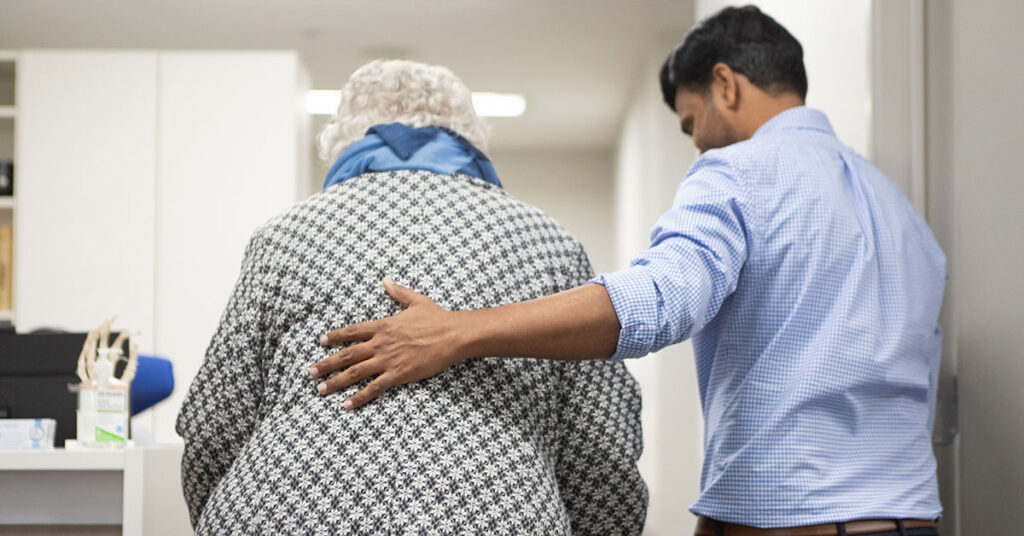
Residents might also be supported to walk from their rooms to the wellness area, instead of being pushed in a chair – which, not coincidentally, provides a quick warm-up ahead of an exercise class!
CraigCare Moonee Pond’s manager Mary Jossey says the program not only increased residents’ mobility but also boosted their social and emotional connections, making the facility a more enjoyable place to live and work.
The onsite wellness centre has also become a drawcard for prospective residents and their families. The home is now close to capacity.
“And I’m spreading this news to our CEO and our management team, about how good it is,” Mary said. “And they are aware that this is a worthwhile investment.”
Juliet Fieldew, NWMPHN integration officer, said the allied health in aged care program demonstrated how primary health networks could promote systemic change in the health system.
“This program has helped expand the scope of allied health clinicians working in aged care homes,” she said.
“Where previously their main role was to assess residents’ mobility and plan care needs, now they are using their expertise to help them regain a crucial level of independence. It’s a great example of how NWMPHN and stakeholders can work together to enhance multidisciplinary care – because we know this improves health outcomes.
“In this case, that stronger relationship between allied health and aged care means residents are learning to walk again, regain or improve their confidence and quality of life – and that’s just better for everyone, including the home and its staff.”