The Doctors in Secondary Schools (DiSS) team at Glenroy College make a point of trying to see every Year 7 student through the year.
These quick, friendly catch-ups are good for collecting some baseline data – but even better for setting up a relationship for years to come.
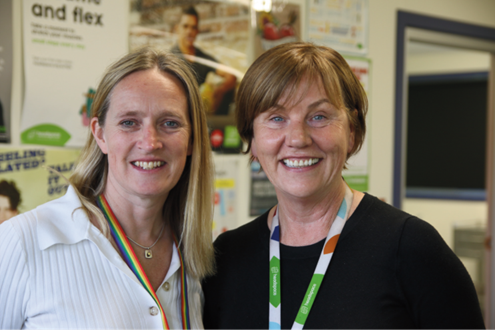
We interviewed practice nurse Annie Reid about the process.
Question: What led to the initiation of the Year 7 health checks?
Answer: Glenroy College is a relatively small school, with around 80 new Year 7 students each year. At DiSS, we saw a great opportunity to connect with students right at the start of their high school journey.
Meeting students early helps break down barriers to health care, puts friendly and familiar faces to the service, and normalises the DiSS clinic as a safe, welcoming place within the school.
It also means that over the course of their time at Glenroy, almost all students will have had at least one positive interaction with DiSS. They know where we are, who we are, and how to access us if they need support later on.
We also wanted parents and carers to feel confident about the service and reassured that there is accessible health support available to their children throughout secondary school.
Q: Can you provide us with an overview of the Year 7 health check initiative and how this operates?
A: We prioritise students who are already linked in with Student Wellbeing or Inclusion, and then see the remaining Year 7 students gradually over the course of the year. I collect students directly from class and bring them over to the DiSS clinic. We start by getting comfortable in the space and I introduce them to the clinician here, Dr Ros Norton.
I explain what DiSS is, the kinds of things students come to see us about, our clinic day and hours and how they can access the clinic at any time during their high school years.
We talk about confidentiality in a clear, age-appropriate way, including its limits, and I let students know that their parent or carer has given consent for them to be seen. I also explain that I’ll be in touch with their family afterwards to introduce myself and the service.
All students have a psychosocial HEEADSSS assessment, but it’s done in a very relaxed, conversational way rather than as a formal checklist. Having worked for many years in mental health, sexual health, and the alcohol and other drugs (AOD) sector, I feel confident talking about sensitive topics in a way that feels safe, respectful, and non-threatening.
Questions are woven naturally into conversations about what’s going on in young people’s lives.
We also do some basic health screening, including a Snellen chart for vision and the Whisper Test for hearing. We check immunisation status, ask about dental care, and talk about things like screen use, sleep, vaping, energy drinks, eating, and body image.
By the end of the appointment, we usually have a really good sense of how that student is going across multiple areas of their wellbeing.
Q: What are the most common health concerns you see in Year 7 as students transition to high school?
A: Most Year 7 students are physically healthy, so a lot of the work we do focuses on social and emotional wellbeing. Common concerns include anxiety about starting high school, loneliness, worries about schoolwork, and navigating new or changing friendship groups.
We also talk a lot about skin concerns, puberty and periods, eating issues and self-esteem.
From a physical health perspective, problems with eyesight come up quite often and can have a big impact on learning if they’re not picked up early. Screen time and social media use are frequent topics of conversation, particularly in relation to sleep, body image, and self-confidence. Bullying and exclusion are issues some students need support with.
Neurodiversity frequently comes up in Year 7, either as a previously identified diagnosis, school behaviours linked to neurodivergence, or emerging differences that may benefit from further assessment and support.
We also see a smaller number of students with more complex needs, including ongoing physical or mental health issues, or challenging home environments related to family illness, violence, substance use, or financial stress.
The health checks allow us to identify these concerns early, offer support and reassurance, and link students in with the School Wellbeing Team, Glenroy Headspace, local services, or broader health supports as needed.
Q: How do you introduce the DiSS clinic to Year 7 in a way that feels comfortable and approachable?
A: Dr Ros and I attend the Year 6 orientation day before the summer break. We spend about 10 minutes in each class introducing ourselves and DiSS, explaining what we do, and letting students know they’ll be seeing us individually the following year.
We make a point of reassuring them that there’s nothing to worry about when I come to collect them from class.
During orientation, Year 6 students are also brought over to the DiSS clinic in small groups so they can see the space and get a feel for it. We revisit classes again at the start of the school year and keep promoting the service through the school newsletter and Compass, so DiSS stays visible and familiar.
One of the main aims of DiSS is for students to gain an understanding of how a doctor and a nurse can help as they get older, and to develop their health literacy skills.
Q: Do you have any strategies that you use to engage Year 7 students in the DiSS program?
A: The biggest strategy is simply being friendly, open, and genuinely interested in young people. We work hard to be non-judgemental and approachable, and to create a space where students feel listened to and respected.
Being based at the school, using informal conversations rather than clinical language, and having a consistent presence all help normalise the service.
Just as importantly, we aim to be a reliable and trustworthy source of health information. Many students are exposed to misinformation online, particularly through social media platforms like TikTok. DiSS provides a space where they can ask questions freely and get clear, evidence-based information in a way that makes sense to them.
Q: Is the appointment process different from the standard clinic process?
A: Yes. Year 7 wellbeing checks aren’t booked in advance. On each clinic day, I choose a few students from the list, check that they’re at school, and then go to class to collect them. I let the teacher know that the student will usually be with me for around an hour.
This means students quickly get used to seeing me popping into classrooms, which really reduces any embarrassment or stigma about being taken out of class to see “the nurse”.
Q: Have you faced any barriers regarding consent and confidentiality, and how do you navigate this?
A: We haven’t experienced any major barriers. School leadership and the Student Wellbeing team are very supportive, and family inclusive practice is a core DiSS principle.
I always aim to speak with parents or carers after seeing their child, even if that takes a few attempts due to busy schedules. Glenroy College is very culturally diverse, so using phone interpreters to speak with families is part of our everyday practice.
In the three years we’ve been running this program, I’ve never received negative feedback from parents or carers. Families are usually very appreciative of the service and of our contact. Parents also often have their own worries about the transition to high school, so it’s lovely to be able to offer reassurance and a listening ear.
Q: What health trends have you identified during Year 7 health checks and how has that informed your practice and the school?
A: The trends we see are consistent year to year and reflect many of the issues outlined above, particularly around anxiety, social connection, sleep, screen use, and early identification of physical health issues like vision. Seeing these patterns has reinforced the importance of early, proactive engagement and strong collaboration with the School Wellbeing Team.
Q: What feedback has been received from the Year 7 health checks?
A: Feedback from students, families, and school staff has been overwhelmingly positive. Students feel more confident accessing DiSS after their first appointment and often come back later on for support.
Parents value early communication and reassurance, and staff appreciate the early identification of health and wellbeing concerns, which supports students’ engagement and learning throughout the school years.