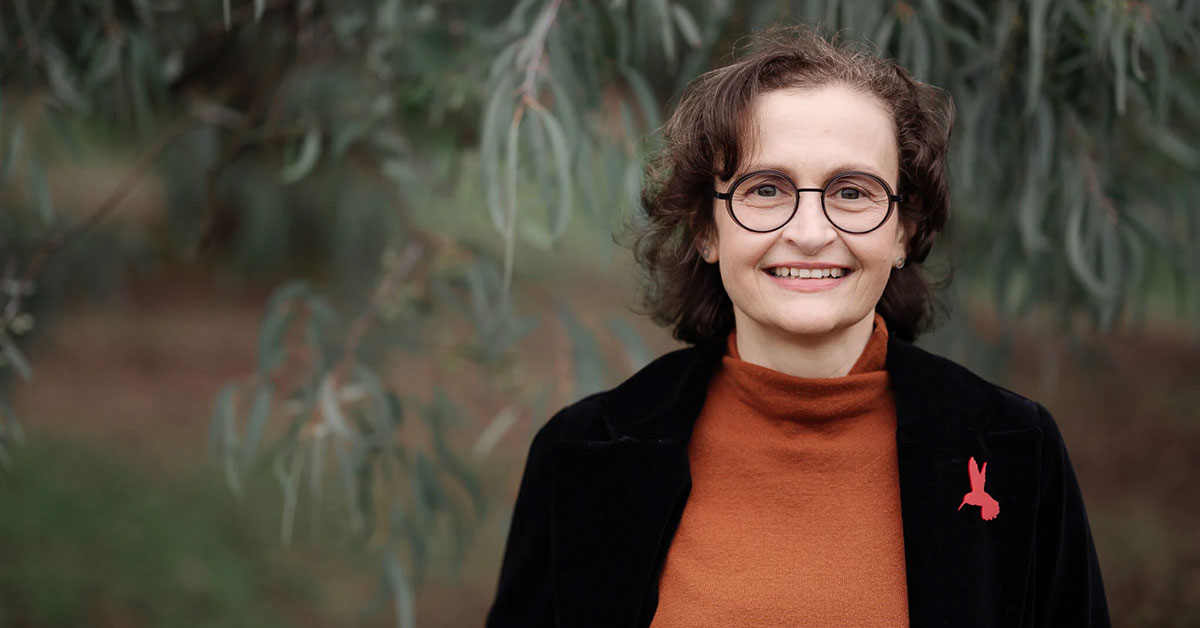
To Dr Ivana Matic-Stancin, menopause and perimenopause are conditions requiring much more than a clinical response and pharmaceutical management.
“More than half of my consultations are about midlife women’s transition through menopause,” she says. “The area has been my main focus for more than five years now.”
As well as one-on-one consults, in-clinic and online, Dr Matic-Stancin conducts group sessions at the Maxwell Medical Group in Braybrook and the Wattle Medical Group in Yarraville.
“It’s basically cognitive behaviour therapy (CBT) for menopause,” she explains. “I don’t think it’s very much available here in Victoria. I obtained my qualification to run this program few years ago through the British Menopause Society.”
The opening this year of the dedicated endometriosis and pelvic pain clinic in Melbourne’s west – funded by the Australian Government and overseen by North Western Melbourne Primary Health Network – has thrown welcome focus on women’s health in the region.
Its advent provides a boost to women’s health services in the region already available through general practice – including the innovative, holistic approach provided by Dr Matic-Stancin.
“CBT is basically an evidence-based strategy, second after hormone replacement therapy (HRT) for managing hot flushes, mood swings and insomnia,” she explains. “It’s endorsed by peak bodies in Australia and overseas.”
The approach, she says, is valuable for women using HRT as well as those for whom it is not clinically appropriate. It’s important, she adds, for each person to examine how other aspects of life can modify menopausal management methods.
More open discussion of menopause and perimenopause over recent years has led to greater awareness of symptoms and options for women. However, given the ubiquity of social media, the information flow is sometimes turbulent.
“There are lots of people who are now more knowledgeable about hormones, which is great,” she says.
“But there is a downside, because there are a lot of influencers out there, some of whom talk very narrowly about the topic.
“So when I see a patient one-on-one in the clinic I spend most of the time really unpacking their story and sharing with them the current scientific knowledge about the value of HRT and outlining the gaps in that knowledge.”
Menopause science, she notes, is still very young, with research into the subject languishing “in a dark age, a dark hole, for decades”.
“I try to really individualise options to that particular person because there is really no one size fits all,” she says.
“And if they have no contraindications, I’m very willing to put them on some form of HRT.
“For some people, it works well. For others, it doesn’t. Sometimes we need to change the formulation, and then the story starts unfolding differently.”
And the story – as chapter follows chapter – isn’t about something ending. It’s about new beginnings.
“I must say something else here,” says Dr Matic-Stancin. “I really try in this clinical setting to make the whole picture bigger, to make them aware that we are not only treating the symptoms but improving their overall health and minimising the potential for certain chronic conditions.
“I’m trying to raise their awareness how this whole perimenopausal point in their life is a very good opportunity for them to understand that it’s a checkpoint, and that they are much more than just their fluctuating hormones.”
Treating the person rather than managing the symptoms, she adds, is fundamental.
“Every single woman I meet in my clinic wants to live healthier. She wants to live healthy and capable in the body she has,” she says.
“So it’s a really big story, about midlife women’s health and life with all the potentials that can easily be dismissed, missed, marginalised, medicalised, and opportunities missed.”
Professional development and training
- Menopause Education Program (for health professionals) | Jean Hailes for Women’s Health
- Webinar library for health professionals | Jean Hailes for Women’s Health
- Training and CPD | Australian Menopause Society
Menopause and perimenopause health assessment
The MBS includes specific items for menopause and perimenopause health assessments. These can be delivered by general practitioners and prescribed medical practitioners to give patients experiencing premature ovarian insufficiency (POI), early menopause, perimenopause and menopause appropriate care and symptom management. See Medicare Benefits Schedule – Note AN.14.3 and Menopause and perimenopause health assessment services.
Additional resources
- Menopause | HealthPathways Melbourne
- Resources for health professionals | Australian Menopause Society