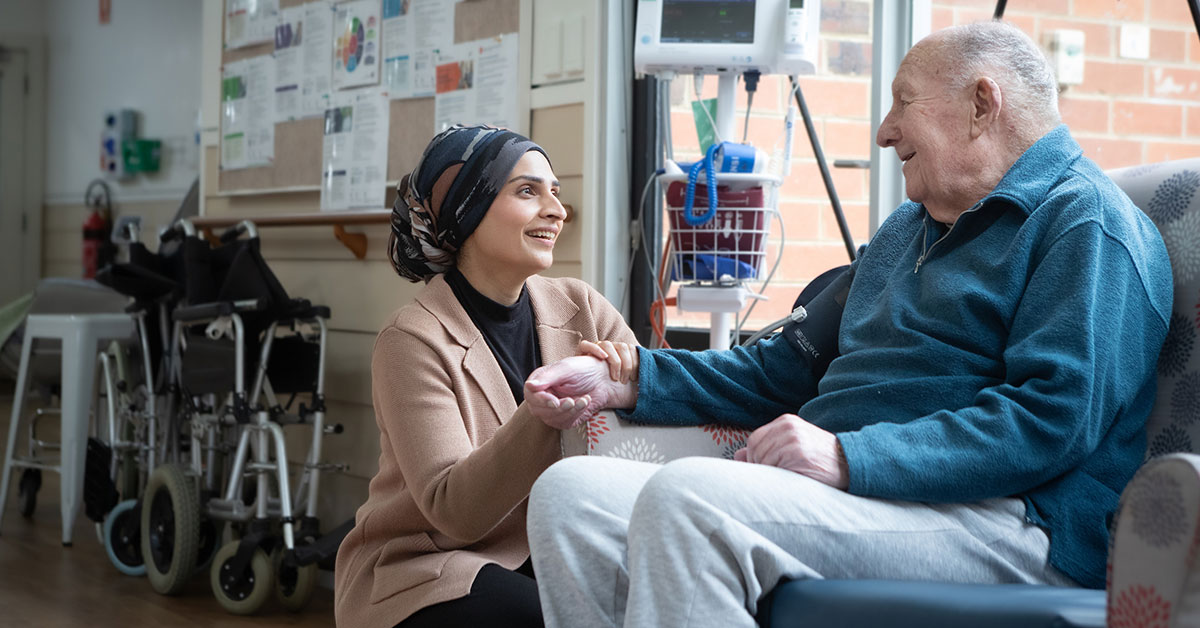
“We maintain high immunisation rates by keeping accurate vaccination records, regularly reviewing residents due for boosters, and coordinating vaccinations with GPs,” says Ayesha Masood.
Ayesha is the Infection Prevention and Control Lead at the Ian Brand Centre, a residential aged care home (RACH) on Northern Health’s Bundoora campus in Melbourne’s north.
The centre is quite small compared to many RACHs in Melbourne. It has just 18 permanent residents, with up to 12 additional people in transitional care.
Many residents, however, have very high needs and exhibit significant physical and cognitive deficits. This makes vaccination against diseases a high priority, but also means obtaining consent can be challenging.
It’s a challenge well met. The Ian Brand Centre has achieved consistently high immunisation rates, including against COVID-19.
A big reason for this, says the centre’s Director of Nursing, Lumnise Gashi, is education.
Information on vaccinations is provided to residents, families and staff. This is backed up by an effective recall and reminder system, coupled with ongoing updates.
“Written consent for vaccination is obtained on admission,” she explains.
“For residents unable to provide informed consent due to any reasons, we go to that person’s medical treatment decision maker, or next of kin. After that, the consent form is uploaded into our software management system, Manad.
“Before each vaccination, verbal consent is obtained again and documented. This lets us generate a list in our records.”
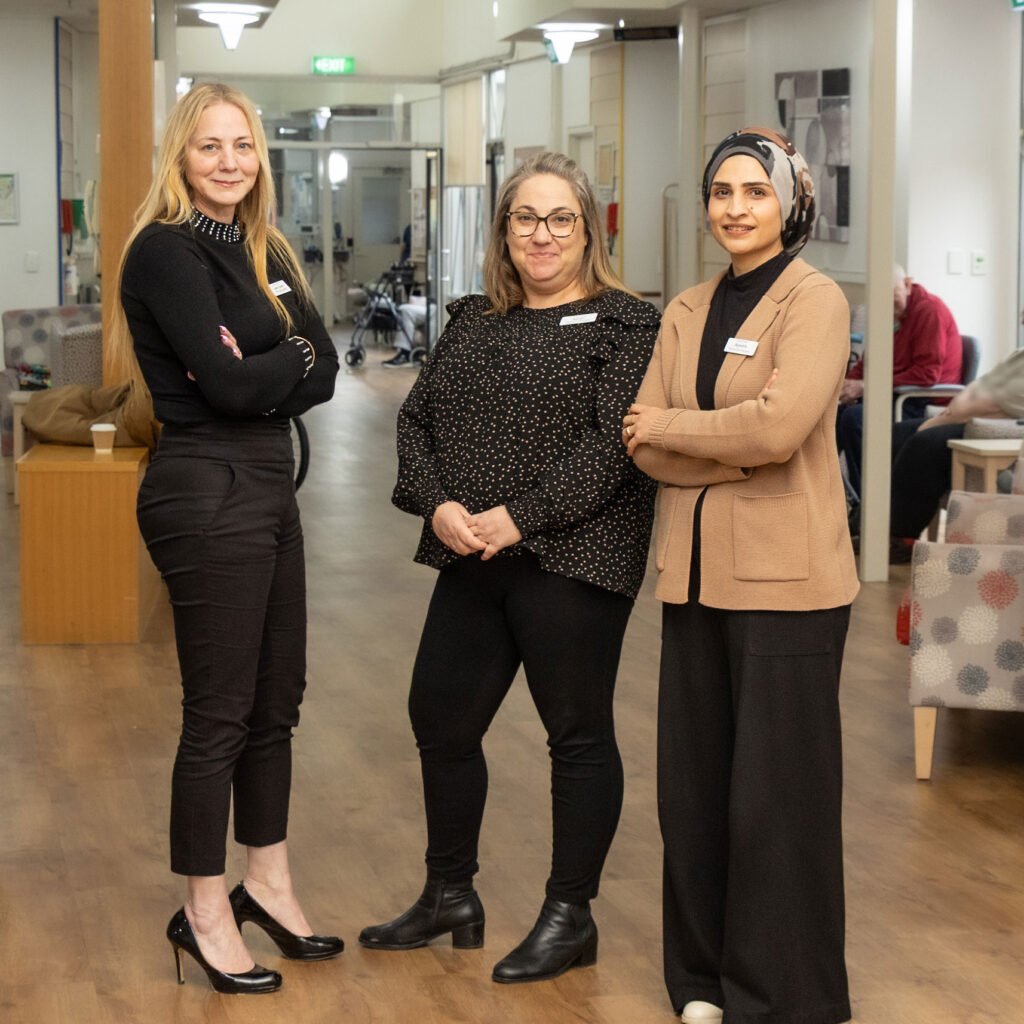
The team at Ian Brand is closeknit. Lumnise works with the facility’s Nursing Unit Manager, Kerryn Busuttil.
Making sure there is a clear and accurate communication between the RACH and its visiting GPs is very important.
“Ongoing monitoring of COVID‑19 vaccination compliance is maintained to ensure residents remain up to date with recommended doses,” says Kerryn.
“Timely communication with general practitioners is facilitated to support the prompt administration of booster vaccinations.”
One of those visiting GPs is Dr Mohamed Rasheed, owner of the Polaris Medical Centre in Bundoora.
Dr Rasheed has extensive experience in providing care to older Australians, initially in hospital settings, then as a home-visiting GP and finally as a clinic owner. He sees many of the residents on his weekly visits.
Rather than collaborate vaccine delivery with a community pharmacist – a method used by GPs in some other RACHs – Dr Rasheed’s clinic orders stock directly from the National Immunisation Program and Victorian Department of Health through a platform called OneLink.
The vaccines are then delivered to Polaris, and from there taken in cold chain-compliant containers to the home.
In his experience, he says, residents or their decision-makers very rarely refuse a COVID-19 vaccination.
“Covid vaccine hesitancy in aged care, I don’t think it’s common,” he says.

Dr Rasheed smiles a lot when he discusses his work at the home. Indeed, laughter among staff is not in short supply.
“The residents make me smile, everything we do, the hard work, the challenges conversations, the singing and dancing and all the laughs along the way – it makes me smile,” says Kerryn.
“Aged care is a vocation but one I am deeply passionate about. After all, we are a connected community and everyone deserves to live their best life.”
Ayesha agrees.
“The most surprising thing about working in aged care is realising how much our residents have contributed throughout their lives,” she says.
“It is a privilege to care for people who have given so much to their families and communities. Their stories, resilience, and kindness make every day meaningful and remind me why I love working in aged care.”
Vaccination resources
- Winter vaccinations – Aged care provider conversation guide| Department of Health, Disability and Ageing
- COVID-19 vaccination | HealthPathways Melbourne (requires login)