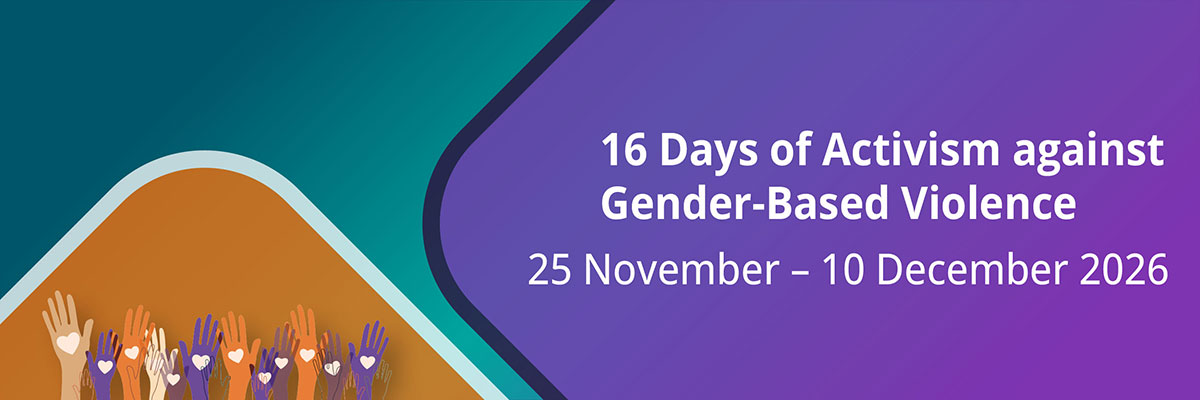
November 25 marks the beginning of the 16 Days of Activism against Gender-Based Violence, an international campaign to end violence against women and girls, led by the United Nations.
North Western Melbourne Primary Health Network (NWMPHN) supports and endorses this campaign and encourages all primary health care providers to do the same.
Gender-based violence remains widespread in Australia. Most gendered violence is committed by someone known to the victim. One in four women have experienced intimate partner violence.
Some groups experience higher rates of violence. These include Aboriginal and Torres Strait Islander women, women from culturally and linguistically diverse backgrounds, women with disability, pregnant women, and trans and gender-diverse people.
The 16 Days of Activism falls in the lead-up to the festive season, which can bring additional pressures for people experiencing family violence, including financial stress and increased alcohol consumption.
Primary care is often the first point of contact for victim-survivors of family and domestic violence, making it important that practices know how to respond safely and appropriately.
Being aware of available supports will help practitioners and staff respond appropriately.
Subscribers to HealthPathways Melbourne can find information on identifying, responding to and referring patients disclosing family and sexual violence. Additional material is provided on NWMPHN’s website.
NWMPHN will be running family, domestic and sexual violence capability building activities in 2027. Any interested staff or practices can reach out to primarycare@nwmphn.org.au for more information and, including brochures and posters to display in your practice.
For advice, referrals or secondary consultation, these services are available:
- Safe Steps: 1800 015 188
- 1800 RESPECT national helpline: 1800 737 732
- Lifeline: 131 114
- To find support in your local area, see vic.gov.au
- (For dedicated LGBTIQ+ family violence assistance) Rainbow Door: 1800 729 367
- (For help for women from non-English-speaking backgrounds) InTouch: 1800 755 988
- (For Aboriginal and Torres Strait Island people) Djirra: 1800 105 303
If someone is in immediate danger, please call 000 and ask for police and ambulance assistance.
Supporting people experiencing family violence can also affect the wellbeing of practitioners and practice staff. All practice staff, including those in non-clinical roles, are encouraged to look out for signs of vicarious trauma and burnout, and to seek support when needed.
GPs can access free, confidential support through the RACGP GP Support Program.
Nurses and midwives can access free and confidential assistance on 03 9415 7551 through the Nursing and Midwifery Health Program Victoria.
All health professionals, care staff and non-clinical practice staff can access peer support through Hand-n-Hand.