Garima Adhikari, residence manager at Arcare aged care in Reservoir, can’t remember the last time one of her residents was diagnosed with COVID-19.
“We have not had a resident test positive here in a long, long time,” she says.
“We haven’t had a COVID-19 outbreak for years and, even for an individual case, it’s been a very long time. It’s something we take pride in.”
The team at the facility – which houses around 69 residents at any given time – has achieved high and consistent rates of COVID-19 vaccination.
Within aged care, securing immunisation for all, or almost all, residents is a notably challenging task. Some have physical or cognitive conditions that might be a barrier to consent, and others (or their families) may simply be vaccine hesitant.
In this case, combining external service providers – pharmacists, nurses and GPs – with inhouse managers and nursing staff works well. It is an approach that centres on each resident, recognising that there is no single effective method for obtaining consent and compliance.
“For us, maintaining a high immunisation rate is the key to keeping our residents safe,” says Garima.
“So we do take a proactive approach to maintaining an up-to-date vaccination register. We have a whole process with a lot of people involved. We regularly review our residents’ vaccinations, including when a new resident moves in.”
Garima and her colleagues organise on-site COVID-19 vaccination clinics every six months, in line with Australian Government Department of Health, Disability and Ageing recommendations for older people.
Information about the vaccines is provided at meetings with residents and families, as well as being included in regular newsletters. Providing evidence-based education is a core strategy.

“We have meetings with each resident and their family every month, where we can talk about this,” she explains.
“But if after all of that the family, or the resident, is still vaccine-hesitant we would probably ask the GP, or perhaps the pharmacist, to directly speak to the family. Sometimes that makes a difference.”
Importantly, the strategy recognises that consent is a fluid process which must be renewed at every stage. Agreement yesterday is not necessarily agreement today.
Pharmacist David Cannalonga is employed by Warrandyte Neighbourhood Pharmacy, but is a regular visitor to Arcare, where he helps to oversee inhouse vaccination clinics.
“The matter of consent is actually something we continually review, because we want to make sure we’re doing the right thing,” he said.
“There might be residents who, for example, are hard of hearing, or have a language barrier or who perhaps lack the capacity to make the decision. So we have consent forms sent out to the people who can make the decision for them.
“This is only part of the process. We have to remember that the resident still has the opportunity to decide whether they want it or not. On the actual day we always respect that the resident – even though they may lack capacity in some respects – still has the right to refuse.”

Sometimes, of course, residents miss their inhouse vaccination appointments for all sorts of reasons. This might be because they are feeling unwell, or have external clinic appointments for other matters, or a dozen other reasons.
When that happens, the RACH organises for them to receive a vaccination as a separate inhouse service. Sometimes, that’s provided by David.
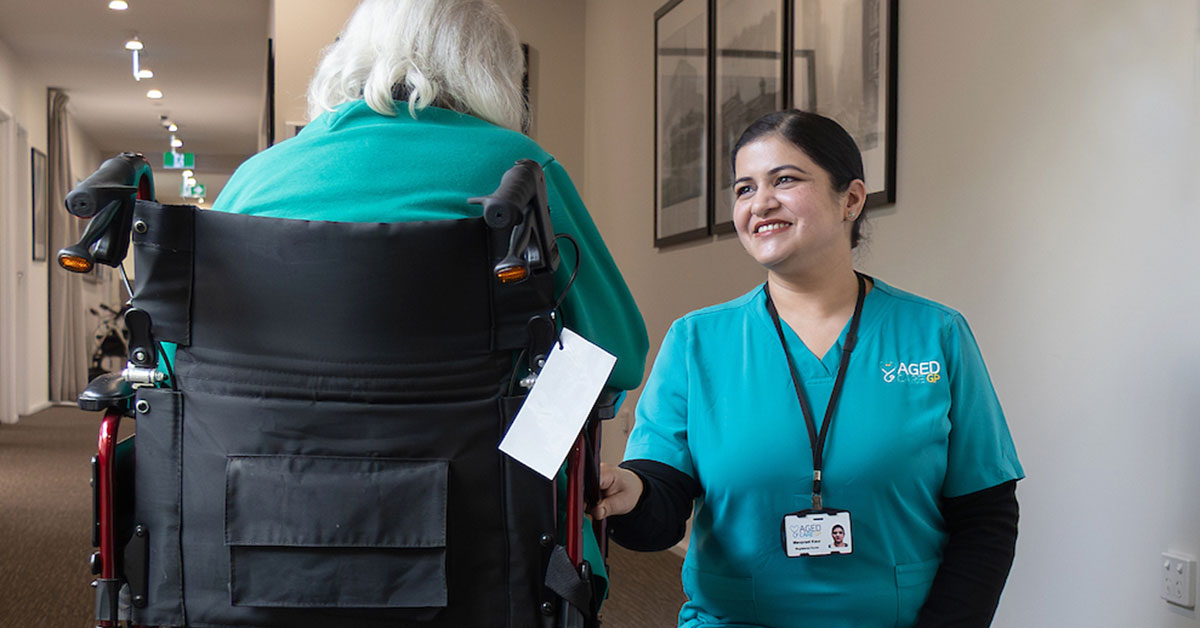
But sometimes, too, Aname Borres, the facility’s Nurse Unit Manager and Infection Prevention and Control (IPC) Lead, reaches out to nurse-immuniser Manpreet Kaur, who works for a company called Aged Care GP.
“In my IPC Lead role, I oversee the vaccination program by conducting audits, monitoring residents’ eligibility and due dates, coordinating with our GP clinic nurse and pharmacist, and planning the vaccination clinic schedules,” says Anamae.
“I also lead the consent process by working closely with residents, their next of kin, legal representatives and my colleagues. Once this process is complete, I communicate and coordinate with our residence manager, clinical team, and administration staff to ensure the program is delivered efficiently.
“I have a great relationship with Manpreet, so I send her emails, or call her. I liaise with her to organise the vaccination for the resident.”
Manpreet is a familiar face around the Arcare corridors, visiting at least once a month.
“We try to gain consent and conduct a one-day clinic, which is easier for everyone, including the aged care facility and the pharmacist,” she said.
“But if we miss a resident because they weren’t in the facility, or they were unwell at the time, then we arrange a catch-up clinic, with other vaccinations.”
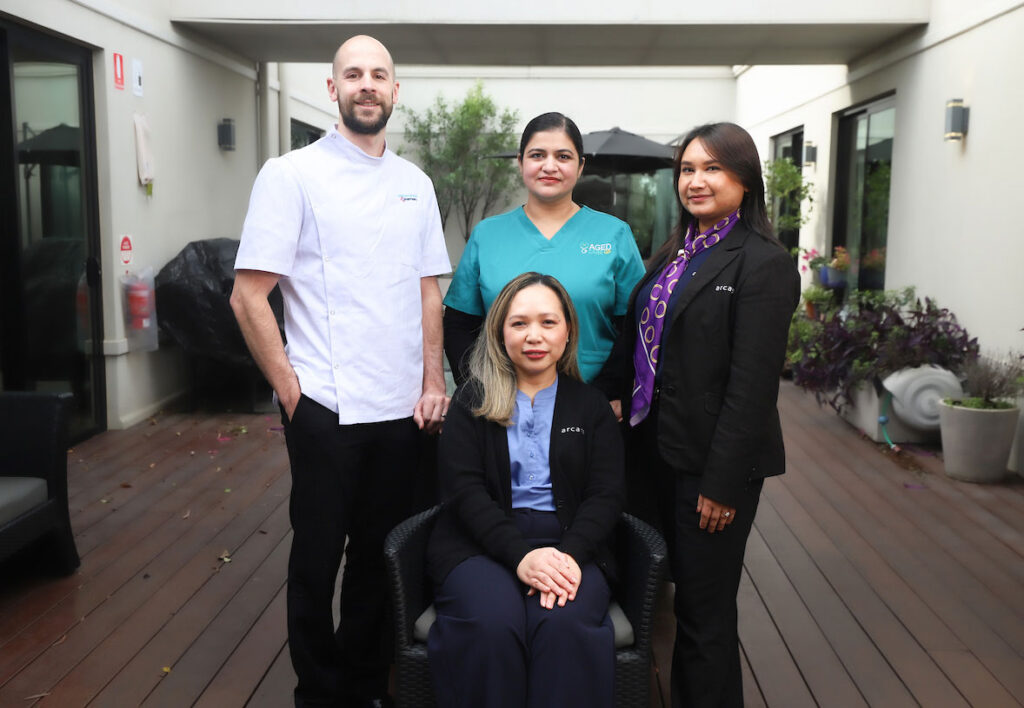
The integration of internal and external care and service providers used in Arcare’s model means that there are a series of checks and balances built into the system – all of which safeguard resident health and safety.
“We make sure our doctors’ records are up to date and we check the Australian Immunisation Register on a regular basis,” explained Manpreet.
“We also put reminders of due dates in our clinical software. We rely on the residential aged care facility to obtain consent from the residents and, if necessary, next of kin.
“We collaborate with the community pharmacy. When we have gained the consents, the list of residents is approved by our checking doctor, then we send the list and consents to the pharmacy. The pharmacy then double-checks the eligibility.
“So, everyone is checked twice – sometimes we might discover during the paperwork process that someone is not due.”
Collaboration, all round, is the key.
“With Manpreet and David, I think we’ve been working closely with them for the last two to three years,” says Anamae.
“That’s working really well for us, because it means the records are up to date. They will send me a spreadsheet that says, ok, this resident is due for pneumococcal vaccination, or shingles or flu, as well as COVID-19.
“So often in the clinic a resident can receive more than one vaccination at the same time.
“I’m very grateful for the work Manpreet and David do.”
Vaccination resources
- Winter vaccinations are your best preparation – Aged care provider conversation guide | Australian Government Department of Health, Disability and Ageing
- COVID-19 vaccination | HealthPathways Melbourne (requires login)